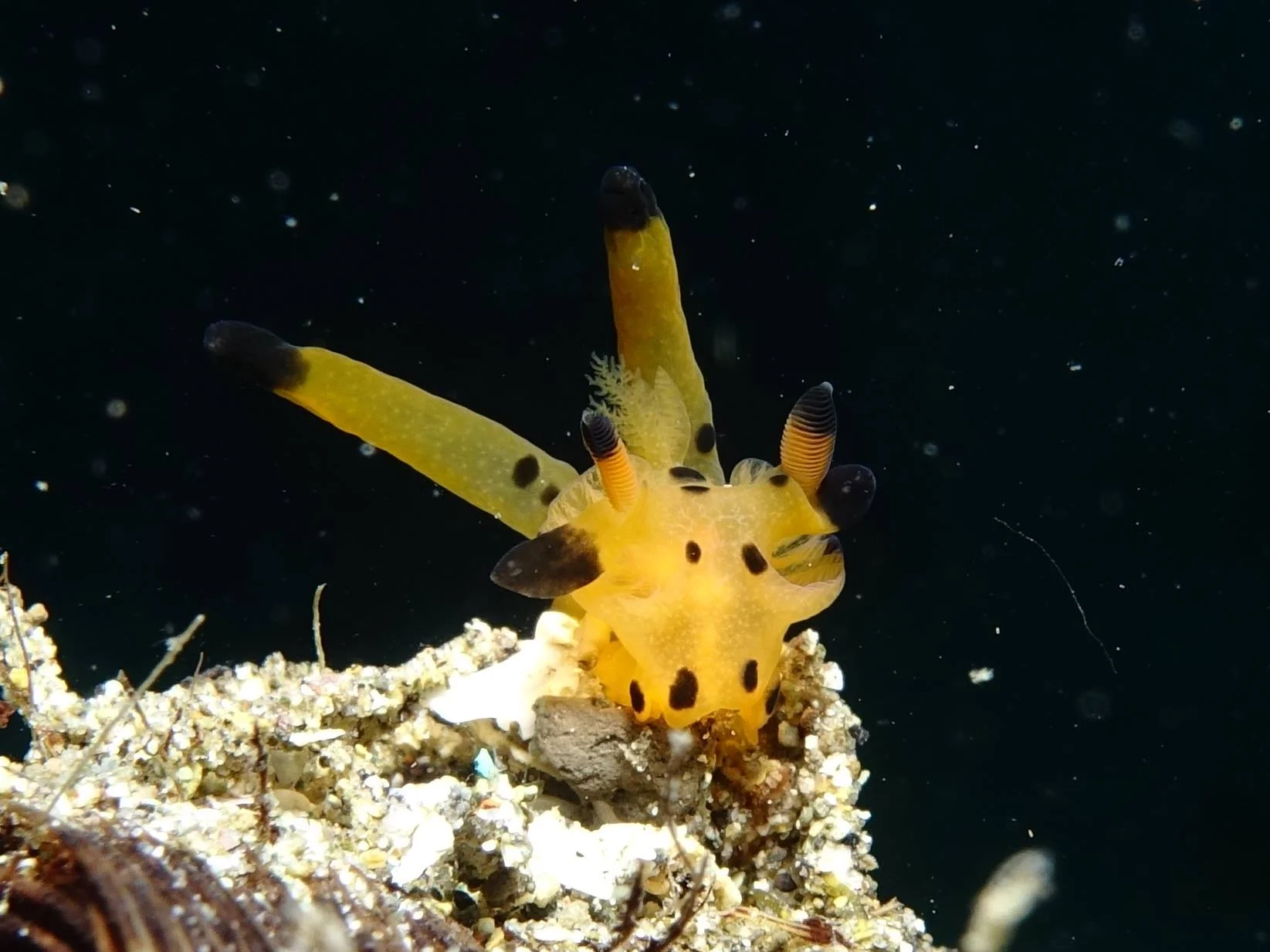
Anilao's nudibranch diversity is staggering — estimates range from 600 to over 800 species recorded within a few kilometres of coastline. The combination of nutrient-rich cold upwellings, diverse substrate types, and minimal trawling disturbance makes Batangas water ideal habitat for these soft-bodied molluscs.
What Makes a Nudibranch
Nudibranchs (order Nudibranchia) are shell-less marine gastropods that breathe through exposed gill plumes — the word literally means "naked gills" in Latin. They range from 4mm to over 60cm and use vivid coloration to signal toxicity to would-be predators. Many species feed on specific prey: certain aeolids consume hydroids, while dorid nudibranchs specialise in sponges.
Top 10 Most Photographed in Anilao
- Halgerda batangas — Described from Batangas specimens; translucent white with orange ridges. Found at 12–22 m.
- Flabellina exoptata — Electric-pink cerata tipped in white. Prefers hydroids at 6–15 m.
- Chromodoris annae — Electric-blue body with yellow and black margins. Very common at Twin Rocks.
- Nembrotha kubaryana — Dark body with bright green spots; grazes on colonial tunicates.
- Hypselodoris apolegma — Deep violet with white-tipped cerata; one of the most-sought Anilao finds.
- Cyerce nigricans — Translucent with iridescent blue and orange spots; autotomises its cerata when threatened.
- Jorunna funebris — White with black spots and fuzzy caryophyllidia; resembles a dalmatian at macro range.
- Phyllidiella pustulosa — The most commonly seen nudibranch in the Philippines; toxic to fish.
- Risbecia tryoni — Rides on the tail of a partner in a chain behaviour unique to this genus.
- Trinchesia sibogae — Under 6mm; requires a magnifying dioptre to appreciate the detail.
Best site for nudibranchs: Secret Bay (muck diving) and Kirby's Rock (reef wall). Dive early morning when light angles are low and animals are most active.
Photography Tips
Shoot at f/16 – f/22 for sufficient depth-of-field at extreme macro range. Use a single strobe placed 45° to the subject to avoid head-on glare from the reflective mucus coating. A 100mm macro lens or a +15 dioptre on a wide-angle lens will let you fill the frame with a 2cm animal.